

Even though chilly, damp weather invites you to relax at home under a blanket, one activity is still quintessential—flying kites. A big kite, with a winder, for kids or for adults? There are plenty of options, and here’s an overview.
Classic single-line kite
Single-line kites are the ones you remember from childhood. The handling—and thus the principle of flight—is always the same. You control the kite with a single line or fishing line, which limits maneuverability. The biggest differences in this category are in the frame, materials, and design. A quality kite can come with or without a tail; the tail is a design element that also helps with stability in the wind. Kites are available as 3D models, from classic forms to unusual ones like butterflies, parrots, and even airplanes.
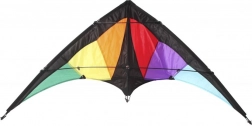
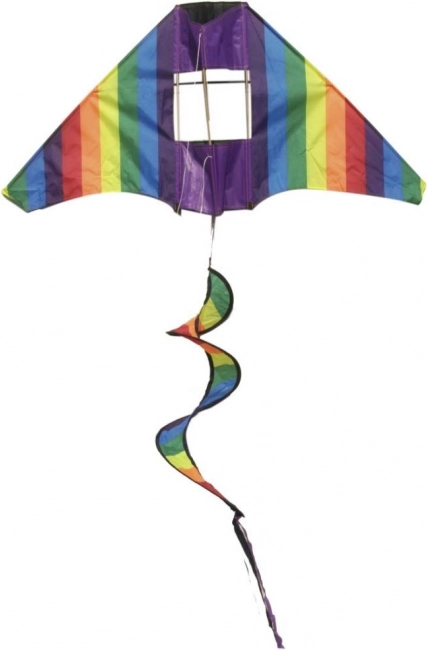
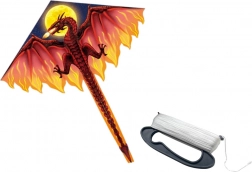
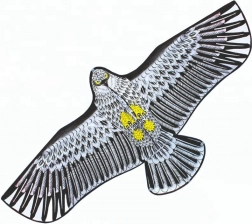
Stunt kite – dual-line
As the name suggests, a dual-line kite is suited to more precise control, spins, and other tricks. That makes it suitable for older children and adults. Its shape resembles a hang glider. The frame is sturdier and reinforced. You control it via two lines attached symmetrically to each wing. This allows for various tricks and loops. These characteristics are reflected in the price, which is higher than for single-line kites.
Other types of kites:
- Dual-line – parafoil kite
- DIY – tutorials can be found all over the internet
We recommend flying your kite in a sufficiently open area, away from footpaths, cycle paths, and roads. Watch out for uneven ground, high-voltage lines, trees, as well as bushes and tall grass.
Now just wait for the wind and head outside.