
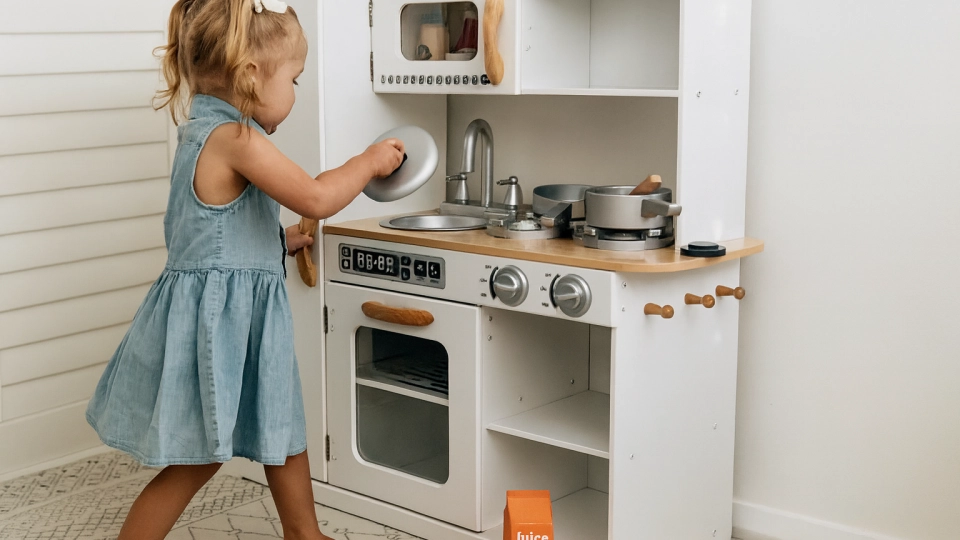
The play kitchen, a toy many of us remember from our own childhood, is enjoying a renaissance. But while some get a kitchen for a child's first birthday, others wait until preschool age. So when is the right time? And does it even make sense? Yes, if we know what to expect from a play kitchen and how to offer it to the child. This article examines not only the question of "when," but also "why" and "which one."
When is the right time? The developmental milestones that matter
Children don't start cooking at two years old overnight. First they observe how the adult world works and only over time do they venture into symbolic play. Interest in imitating adults appears as early as around 18 months, but every child develops individually.
The ideal time to get a play kitchen is between 20 and 30 months, when a child begins to understand the idea of playing house. If you buy it too early, the kitchen may just sit in the corner. For older children who already love inventing stories and roles, it's worth outfitting the kitchen more richly and involving them in choosing it.
Sometimes a child is fascinated by cooking at a year and a half, other times they warm up to a play kitchen at three. More important than age is to watch what your child enjoys right now and how they engage in play.
What does a child practice by playing with a play kitchen?
There is much more to "playing at cooking" than just fun. A play kitchen helps develop a child on multiple levels at once.
Fine motor skills: handling small objects, opening cabinets, stirring with a spoon, putting lids on—all of this strengthens the wrists and fingers.
Social skills: cooking for Mom, inviting stuffed animals to a feast, playing with friends. Children learn the rules of communication and cooperation.
Language: there is a lot of talking in a play kitchen. A lot. Children expand their vocabulary, form sentences, and repeat expressions they know from home.
Independence and self-care: the child learns that it's normal to prepare something, clean up after themselves, and look after "guests." These are skills that will make life easier later on.
Which play kitchen to choose by age and space
There isn't a universal kitchen for everyone. A two-year-old needs a different one than a five-year-old.
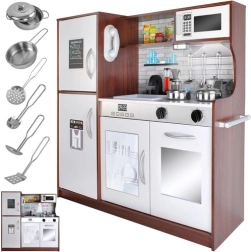
For younger children, compact models without complex details are ideal, preferably made of sturdy plastic or wood. For older children, the kitchen can easily be more complex, with an oven, microwave, or a sink with a faucet.
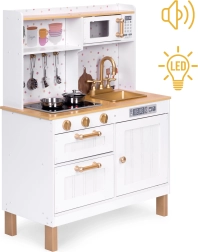
It's important that the kitchen matches the child's height and is stable. For bigger kids, it can be interesting to look for kitchens with realistic features such as sound, light, or moving parts.
At Kidero.com you will find, for example, stylish wooden play kitchens with accessories that suit modern interiors while offering plenty of space for play.

Tips to encourage play with the kitchen so it doesn't end up just for show
Is the reality that the play kitchen is forgotten after two weeks? It can happen. The key is how we draw the child into the play.
Take inspiration from real life. Have you just chopped vegetables? Give your child their carrot and a spoon. Cooking pasta? Let them cook pasta too.
Playing together is crucial. Try pretend scenarios where you come to a restaurant for lunch and order a meal. This gives the child a model for how the play can unfold.
Swap out the accessories regularly. It doesn't have to be anything expensive. A paper cake, scraps of fabric as napkins, yogurt cups. New prompts keep the play fresh.
Offer other ways to use the kitchen. It can become a café, a shop, a hotel breakfast. More variety means more interest. Sometimes a small accessory is all you need.
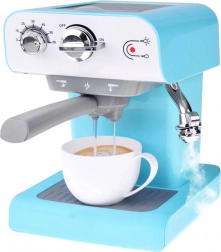
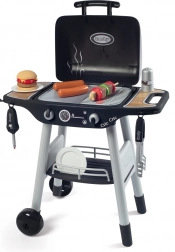

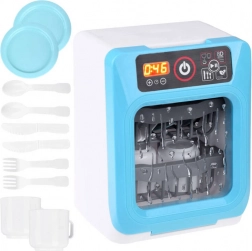
A play kitchen as a gift: when it delights most and what to add
A play kitchen is an ideal gift for a second or third birthday. The child will enjoy it and have plenty of time to play with it. They’re also great as a Christmas gift, and you can tie a ribbon around the box right away.
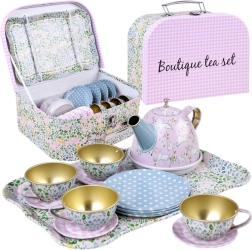
If the child already has a kitchen, you can refresh it with a new accessory. On Kidero.com you can find, for example, a toy mixer, sliceable fruit with Velcro, or realistic plates.
It's also important to watch for safety: the kitchen should be stable, with no sharp edges, ideally made of high-quality, non-toxic material.

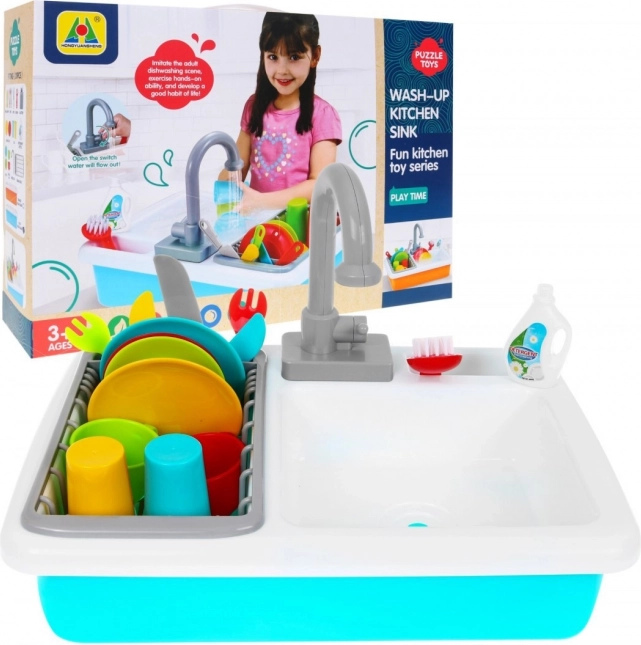

A play kitchen is more than just a toy. It's a space for growth, for play, for building relationships and imagination. If you get it at the right time, it can become the heart of a child's room.
You can find more inspiration on our blog or in the Kidero.com e-shop